4.9Top Rated Serviceverified by TrustindexTrustindex verifies that the company has a review score above 4.5, based on reviews collected on Google over the past 12 months, qualifying it to receive the Top Rated Certificate.



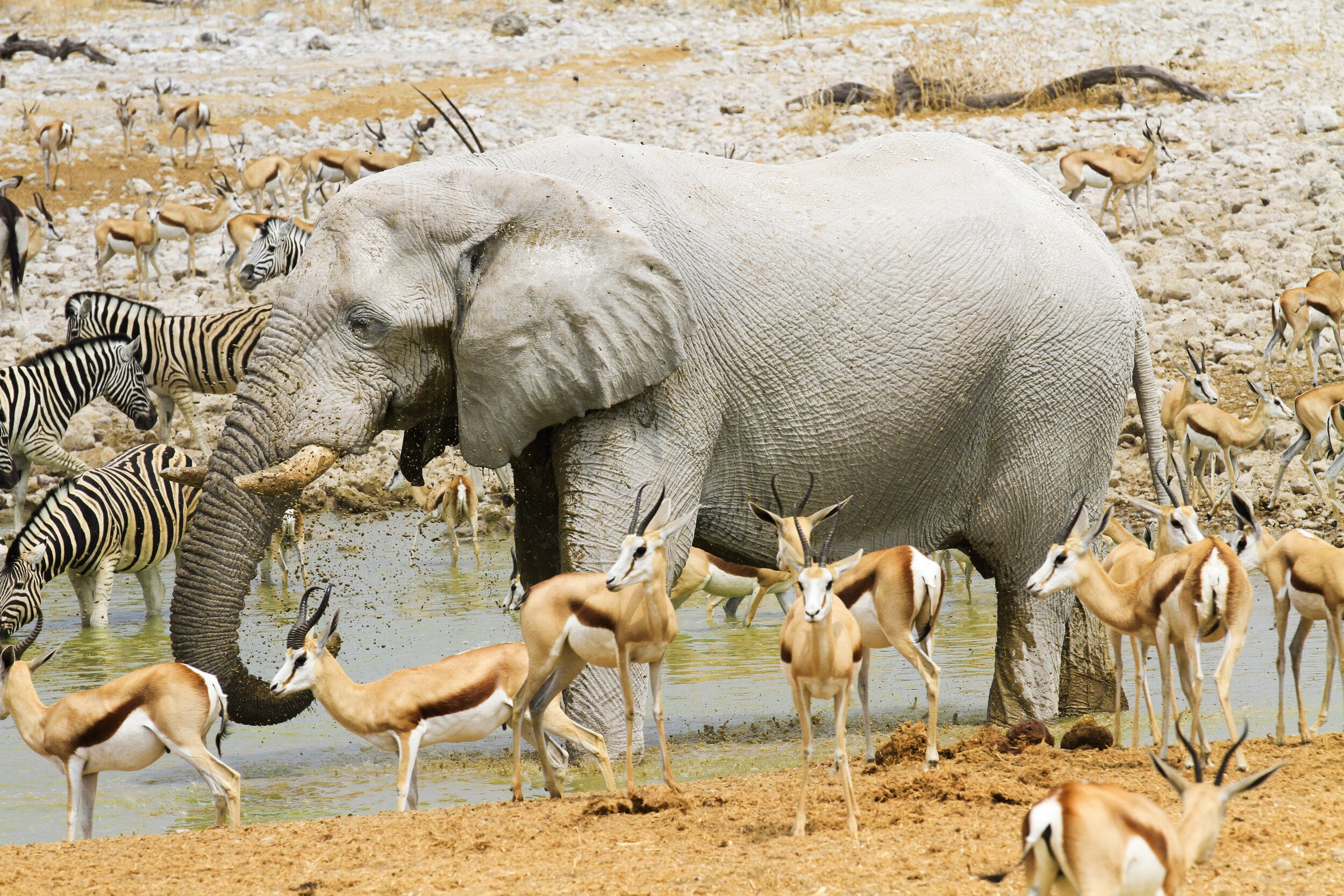
Botswana is a prosperous country known for its arid climate, sweeping savannah flatlands and the wetland oasis, the Okavango Delta. Botswana is an entirely unique safari destination featuring some of Africa’s most diverse wilderness and geographic grandeur, and what better way to soak up the seemingly endless beauty of such a destination than with us on Safari.
Our Botswana luxury safari tours are designed to create exceptional travel experiences and unforgettable memories. We take pride in our knowledge of the area and have tailored our Botswana itineraries, checking over every detail, to showcase the best the country has to offer.
Thanks to Botswana’s decision to minimise its tourist footprint, the discerning traveller will enjoy a profoundly exclusive luxury safari in true wildlands, including a reserve known as the “Elephant Capital of the World”.
Beyond the narrow eastern corridor housing most of Botswana’s population lies a near-roadless wilderness of savannahs, arid ground, and salt pans, making up the vast flatlands and surrounds of the Kalahari Desert.
In the midst of this untamed landscape lies the Okavango Delta, a wetland oasis of forking rivers blanketed in vegetation and overflowing with wildlife.
The range of landscapes packed into this part of the country means a safari-goer can visit four different lodges and encounter four unique experiences, spending time in the region’s delta, desert, savannah and riverine environments across our luxury Botswana safari holidays.
Botswana’s low-density tourism model is exactly why it carries a higher price tag than most of Southern Africa, and it’s worth understanding what that buys before you commit to dates.
As a guide, a luxury Botswana safari tour typically runs from AUD $1,500 to $3,900 per person, per night, depending on lodge tier, region and season. Entry-level luxury camps sit toward the lower end of that range, while owner-run properties in prime Okavango Delta or Chobe concessions, particularly those with private plunge pools or exclusive traversing rights, sit toward the top.
As a sample, a 7- to 10-night fly-in itinerary combining the Okavango Delta, Chobe National Park and Victoria Falls, with light aircraft transfers between camps, private game drives, and full board throughout, typically comes in between AUD $12,000 and $22,000 per person, excluding international flights. Shorter, single-region trips focused purely on the Delta can come in lower, while multi-country combinations that extend into Zambia or Zimbabwe naturally push the total higher.
Rates shift with lodge availability and season, so we always confirm current pricing before finalising your itinerary.
Due to their policy of capping tourist numbers in favour of conservation, Botswana is the most expensive safari destination in Southern Africa, but it’s also the most distinctive.
Safari lodges in these locations are easily on par with anything you might find elsewhere in Africa, both in terms of the excellence of their luxurious accommodation and the warmth of their personalised hospitality.
Botswana also has the honour of being considered the most stable and safe of all African nations, meaning you can be assured of enjoying one of our Botswana safaris with the highest degree of comfort and safety.
Answer a few simple questions and we’ll provide you with a customised itinerary absolutely free.
Our trip of a lifetime to East Africa and our safaris was absolutely mind blowing .The fact of seeing wild animals close up in their environment was a surreal experience that we will have lifetime memories from . This trip was planned over 18 months, and involved a lot of itinerary changes due to the […]
Everything was perfect, and the whole trip went seamlessly with everything completely organised. I really couldn’t have asked for better, from the wonderful accommodation to the drivers and guides, everyone made us feel so welcome. The Fairmont Norfolk in Nairobi was lovely, as were both the safari lodges. I think my favourite lodge though was […]
Dear John Thank you for arranging a fantastic time in South Africa and the Mashatu area in Botswana. This trip was in the green season, which not only provided great animal viewing but stunning scenery and the beauty of changing weather, which further enhanced our time. The highlight was daily morning sightings of the Brown Hyaena […]
Thank you again for organizing such an amazing experience for us. Totally different to South Africa (we enjoyed the complete holiday in SA with Victoria Falls, Cape Town and Soweto). Kenya was all Safari. We may have scared the House of Waine as we went out to visit the nightlife the second night for cigars […]
What an amazing trip we had. Just wow! It was above and beyond expectations. Felt like we were living in a David Attenborough documentary. Every single person every step of the way was wonderful. The guides, the accommodation, the flights, transfers, everything. Thank you for helping us have the absolute best-ever bucket list adventure in […]
You will be pleased to hear that we had a WOW of a time in South Africa. Firstly Cape Town exceeded our expectations with what was on offer with their wonderful scenery made by so many surrounding mountains. With respect to our time spent on safari, again, it was a wonderful time enjoying nature . […]
The Okavango Delta is widely considered one of Africa’s most remarkable safari environments. Seasonal floodwaters from Angola create a lush wetland oasis in the middle of Botswana’s otherwise dry landscape. This natural phenomenon transforms the region into a thriving wildlife sanctuary that attracts elephants, lions, leopards, hippos, and countless bird species.
Our premium Botswana safari in the Delta often includes several types of wildlife experiences:
Each lodge in the Delta occupies a private concession, allowing travellers to explore vast areas without the crowds often seen in other safari destinations. This exclusivity is a major reason why Botswana is considered one of Africa’s most refined African adventures.
Chobe National Park is 10,000 square kilometres of rich and abundant ecosystems, home to Africa’s largest elephant population. We seldom recommend the resorts here, as they are overcrowded and do not offer a true safari experience. However, we do use the various cruise houseboats on the bountiful Chobe River.
The Kalahari is synonymous for the endless savannah sweeping in all directions, full of wildlife but devoid of human habitation. The remote lodges here are very far apart, meaning your safari viewing experience will always be exclusive and private. Though extremely comfortable, accommodation here may be simpler than in other Botswana safari lodges – however, this is only because the focus is on one thing: the wildlife.
A different approach to safaris that is also suitable for the more budget-conscious traveller, Okavango Expeditions provide experiences very similar to the concept of the original Kenyan safaris of the 1920s. Packing and moving your entire campsite as you move from place to place, campers can choose between fully serviced journeys or self-packed adventures, all depending on your budget and preference.
Chobe National Park is 10,000 square kilometres of rich and abundant ecosystems, home to Africa’s largest elephant population. We seldom recommend the resorts here, as they are overcrowded and do not offer a true safari experience. However, we do use the various cruise houseboats on the bountiful Chobe River.
The Kalahari is synonymous for the endless savannah sweeping in all directions, full of wildlife but devoid of human habitation. The remote lodges here are very far apart, meaning your safari viewing experience will always be exclusive and private. Though extremely comfortable, accommodation here may be simpler than in other Botswana safari lodges – however, this is only because the focus is on one thing: the wildlife.
A different approach to safaris that is also suitable for the more budget-conscious traveller, Okavango Expeditions provide experiences very similar to the concept of the original Kenyan safaris of the 1920s. Packing and moving your entire campsite as you move from place to place, campers can choose between fully serviced journeys or self-packed adventures, all depending on your budget and preference.
Most lodges across Botswana operate on private concessions.
Unlike shared national park circuits elsewhere in Africa, a private concession gives your guide the freedom to drive off-track, follow a sighting for as long as it lasts, and run night drives that aren’t permitted in government-run parks.
For travellers who want to take that privacy further, we can arrange a fully privately guided itinerary: your own vehicle and guide for the length of the trip, rather than sharing a game drive with other lodge guests. This suits honeymooners, milestone celebrations, and anyone who simply prefers their safari on their own schedule rather than a shared one.
Because concessions are already exclusive to each lodge, a private safari Botswana itinerary tends to feel less like a premium add-on and more like the natural way to experience the country.
A new and exciting game camp with a modern and understated style, Sable Alley Game Lodge has the heart and soul of an East African camp but the views and wildlife of the Okavango Delta. Set in game-rich floodplains on Khwai Private Reserve, Sable is a light, bright piece of luxury that is as sustainable as it is sophisticated.
Situated on the salt pan relic of one of the world’s largest super-lakes, Jack’s Camp has ten bedouin-style luxury tents with ensuite bathrooms and exotic furnishings, and is attended by some of the most knowledgeable guides in Africa. Observe a fascinating melody of rare wildlife at this oasis of comfort in an otherworldly landscape.
Set in the midst of ebony and sausage trees on the Okavango Delta, Stanley’s camp is an unpretentious and authentic safari experience with ten luxury tents and private viewing decks. A superb location to view buffalo in large numbers, Stanley’s Camp also offers guests an opportunity for a unique interaction with a herd of rescued orphaned elephants.
Ideally situated overlooking the hippopotamus-filled King’s Pool Lagoon in the private Linyanti Wildlife Reserve, King’s Pool Camp offers specialist wildlife viewing tours such as colonial-style barge rides along the Linyanti River, nocturnal game drives, camouflaged viewing decks, and even wilderness walks in the company of armed and expert guides.
Vumbura Plains is two camps of seven luxury suites apiece, set on raised wooden platforms above the Okavango Delta’s floodplains, allowing perfect viewing of safari wildlife in all directions. Special attractions at this camp include a ride along the Delta on a Makoro (dug-out canoe), nocturnal game drives, and an incomparable view of the ground from the camp’s hot air balloon.
Most lodges across Botswana operate on private concessions.
Unlike shared national park circuits elsewhere in Africa, a private concession gives your guide the freedom to drive off-track, follow a sighting for as long as it lasts, and run night drives that aren’t permitted in government-run parks.
For travellers who want to take that privacy further, we can arrange a fully privately guided itinerary: your own vehicle and guide for the length of the trip, rather than sharing a game drive with other lodge guests. This suits honeymooners, milestone celebrations, and anyone who simply prefers their safari on their own schedule rather than a shared one.
Because concessions are already exclusive to each lodge, a private safari Botswana itinerary tends to feel less like a premium add-on and more like the natural way to experience the country.
A new and exciting game camp with a modern and understated style, Sable Alley Game Lodge has the heart and soul of an East African camp but the views and wildlife of the Okavango Delta. Set in game-rich floodplains on Khwai Private Reserve, Sable is a light, bright piece of luxury that is as sustainable as it is sophisticated.
Situated on the salt pan relic of one of the world’s largest super-lakes, Jack’s Camp has ten bedouin-style luxury tents with ensuite bathrooms and exotic furnishings, and is attended by some of the most knowledgeable guides in Africa. Observe a fascinating melody of rare wildlife at this oasis of comfort in an otherworldly landscape.
Set in the midst of ebony and sausage trees on the Okavango Delta, Stanley’s camp is an unpretentious and authentic safari experience with ten luxury tents and private viewing decks. A superb location to view buffalo in large numbers, Stanley’s Camp also offers guests an opportunity for a unique interaction with a herd of rescued orphaned elephants.
Ideally situated overlooking the hippopotamus-filled King’s Pool Lagoon in the private Linyanti Wildlife Reserve, King’s Pool Camp offers specialist wildlife viewing tours such as colonial-style barge rides along the Linyanti River, nocturnal game drives, camouflaged viewing decks, and even wilderness walks in the company of armed and expert guides.
Vumbura Plains is two camps of seven luxury suites apiece, set on raised wooden platforms above the Okavango Delta’s floodplains, allowing perfect viewing of safari wildlife in all directions. Special attractions at this camp include a ride along the Delta on a Makoro (dug-out canoe), nocturnal game drives, and an incomparable view of the ground from the camp’s hot air balloon.
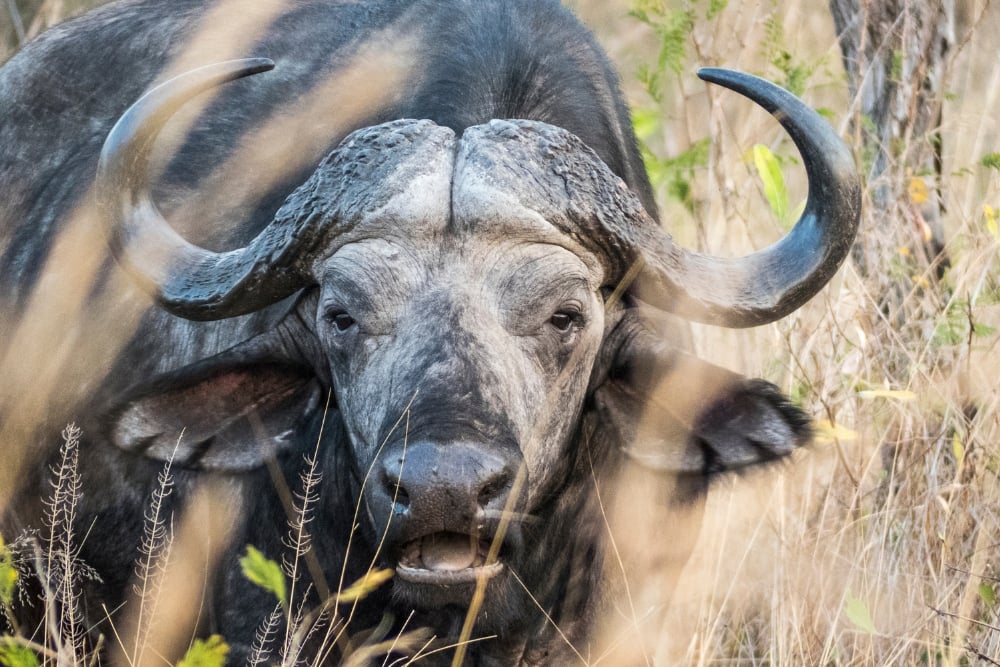
A well-designed Botswana safari often includes more than one region. Each landscape reveals a different side of the country’s wildlife and natural beauty.
What luxury Botswana safari would be complete without a visit to the Okavango Delta? A lush sequence of waterways brimming with animal and plant life in the midst of a vast dry expanse of savannah and desert, the Okavango Delta is a place for safari treks like no other.
Though a desert in name, the Kalahari is actually a complex ecosystem in a landscape of savannah and semi-arid land that supports enormous numbers of game and provides a perfect backdrop for a Botswana wilderness safari. For a true taste of Africa, there can hardly be a more appropriate location than “the great thirst” of the Kalahari Desert.
These ancient salt pans form one of the largest salt flats on Earth. During certain seasons, migrating zebras and antelope move across the landscape, attracting predators and creating a rare safari spectacle.
Combining multiple locations allows travellers to experience the full richness of a luxury Botswana safari while avoiding long travel days.
Covering 5,000 square kilometres on the east of the Okavango Delta, Moremi Game Reserve is home to an impressive array of wildlife, including no less than 500 species of birds, making it superb for bird-watching. The physical landscape is every bit as diverse, with grasslands, floodplains, lagoons, forests of acacia trees, pans, savannahs and dense Mopane Woodlands.
Chobe is famous for its enormous elephant population and dramatic riverfront scenery. Boat safaris along the Chobe River allow travellers to watch elephants, buffalo, and hippos gathering at the water’s edge.
Savute is a remote and fascinating region known for powerful predator activity. Lion prides, hyenas, and large herds of elephants roam the open plains, creating unforgettable wildlife encounters.
A well-designed Botswana safari often includes more than one region. Each landscape reveals a different side of the country’s wildlife and natural beauty.
What luxury Botswana safari would be complete without a visit to the Okavango Delta? A lush sequence of waterways brimming with animal and plant life in the midst of a vast dry expanse of savannah and desert, the Okavango Delta is a place for safari treks like no other.
Though a desert in name, the Kalahari is actually a complex ecosystem in a landscape of savannah and semi-arid land that supports enormous numbers of game and provides a perfect backdrop for a Botswana wilderness safari. For a true taste of Africa, there can hardly be a more appropriate location than “the great thirst” of the Kalahari Desert.
These ancient salt pans form one of the largest salt flats on Earth. During certain seasons, migrating zebras and antelope move across the landscape, attracting predators and creating a rare safari spectacle.
Combining multiple locations allows travellers to experience the full richness of a luxury Botswana safari while avoiding long travel days.
Covering 5,000 square kilometres on the east of the Okavango Delta, Moremi Game Reserve is home to an impressive array of wildlife, including no less than 500 species of birds, making it superb for bird-watching. The physical landscape is every bit as diverse, with grasslands, floodplains, lagoons, forests of acacia trees, pans, savannahs and dense Mopane Woodlands.
Chobe is famous for its enormous elephant population and dramatic riverfront scenery. Boat safaris along the Chobe River allow travellers to watch elephants, buffalo, and hippos gathering at the water’s edge.
Savute is a remote and fascinating region known for powerful predator activity. Lion prides, hyenas, and large herds of elephants roam the open plains, creating unforgettable wildlife encounters.
Botswana has built a global reputation for protecting its wilderness.
The government limits visitor numbers in many safari areas to reduce environmental impact and preserve wildlife habitats. As a result, travellers enjoy exceptional privacy and access to pristine landscapes.
For guests seeking authentic African experiences, Botswana offers several advantages:
This approach creates a Botswana safari experience that feels natural, calm, and deeply connected to the surrounding environment.
Naturally we recommend taking in a game drive in your visit to Botswana – otherwise, why are you even going there? The only problem you will have is choosing between the sheer number of options on the table. Will you choose desert savannah, delta floodplains, desolate salt flats, or pristine rivers? What about luxury game lodges, intimate mobile camps, night-time wildlife tours, or river cruises in traditional canoes? National parks, private reserves, or remote exclusivity? Better yet, just try them all – you won’t look back.
Get up close and personal with the water wildlife of the Okavango Delta by participating in an intimate Makoro Safari. With just you and your guide in a low-impact canoe, pushing your way in tranquility through the teeming waterways, you are sure to get much more than a glimpse of some of the most fascinating wildlife on the planet.
Mobile Camping is a step more adventurous than your regular lodge-style safari with a single location as home base. Instead, on a mobile Botswana safari camp, you will become one with nature as you trek together with a select group of like-minded travellers and superb staff in a visceral wildlife experience that’s never to be forgotten. We recommend mobile camping with Okavango Expeditions.
One of the special attractions at a few rare safari camps in the Kalahari and Makgadikgadi Pans is the opportunity to spend time with some of the cutest and most sociable animals on the planet – meerkats. Thanks to a carefully crafted program of human habituation, guests have the opportunity to get close to, walk with, touch, and sometimes even be sat upon by these enigmatic but engrossing desert creatures.
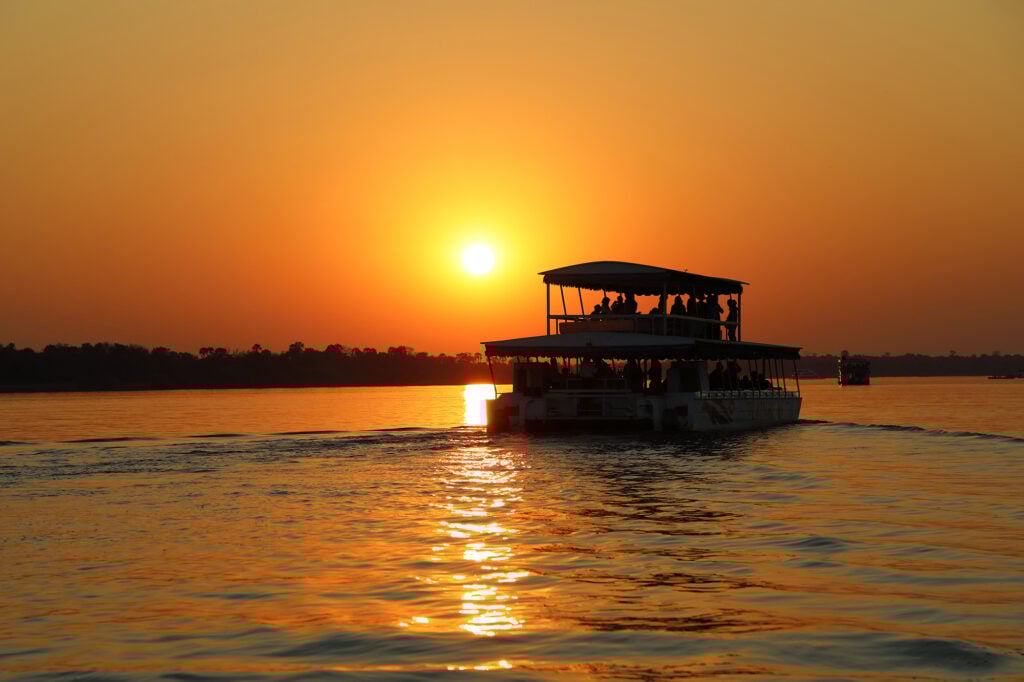
What better way to take in the sights Chobe National Park than via a cruise down its famous river, all the while surrounded by hippos, crocodiles, elephants, and more species of birds than you could name. The hallmark of these cruises is not only the magnificent and up-close wildlife viewing, but also some of the most dramatic sunsets imaginable.
Botswana has built a global reputation for protecting its wilderness.
The government limits visitor numbers in many safari areas to reduce environmental impact and preserve wildlife habitats. As a result, travellers enjoy exceptional privacy and access to pristine landscapes.
For guests seeking authentic African experiences, Botswana offers several advantages:
This approach creates a Botswana safari experience that feels natural, calm, and deeply connected to the surrounding environment.
Naturally we recommend taking in a game drive in your visit to Botswana – otherwise, why are you even going there? The only problem you will have is choosing between the sheer number of options on the table. Will you choose desert savannah, delta floodplains, desolate salt flats, or pristine rivers? What about luxury game lodges, intimate mobile camps, night-time wildlife tours, or river cruises in traditional canoes? National parks, private reserves, or remote exclusivity? Better yet, just try them all – you won’t look back.
Get up close and personal with the water wildlife of the Okavango Delta by participating in an intimate Makoro Safari. With just you and your guide in a low-impact canoe, pushing your way in tranquility through the teeming waterways, you are sure to get much more than a glimpse of some of the most fascinating wildlife on the planet.
Mobile Camping is a step more adventurous than your regular lodge-style safari with a single location as home base. Instead, on a mobile Botswana safari camp, you will become one with nature as you trek together with a select group of like-minded travellers and superb staff in a visceral wildlife experience that’s never to be forgotten. We recommend mobile camping with Okavango Expeditions.
One of the special attractions at a few rare safari camps in the Kalahari and Makgadikgadi Pans is the opportunity to spend time with some of the cutest and most sociable animals on the planet – meerkats. Thanks to a carefully crafted program of human habituation, guests have the opportunity to get close to, walk with, touch, and sometimes even be sat upon by these enigmatic but engrossing desert creatures.
What better way to take in the sights Chobe National Park than via a cruise down its famous river, all the while surrounded by hippos, crocodiles, elephants, and more species of birds than you could name. The hallmark of these cruises is not only the magnificent and up-close wildlife viewing, but also some of the most dramatic sunsets imaginable.
Local Time:
Planning a safari across remote wilderness regions can be challenging without expert support. Internal flights, lodge availability, wildlife seasons, and travel logistics all require careful coordination.
As experienced, attentive travel specialists, we manage every aspect of your safari planning. Our team has extensive first-hand knowledge of Botswana’s safari regions and works closely with trusted lodges and local operators.
This ensures your luxury Botswana safari is organised seamlessly from the moment you depart Australia.
We coordinate:
Instead of juggling multiple bookings, you receive one carefully designed itinerary, allowing you to focus entirely on enjoying the experience.

Both autumn and winter (April through September) are excellent times to visit Botswana, as the days are generally pleasant and the wildlife rarely wanders far from water sources.
Nevertheless, these times also include periods of school holidays in Europe, North America, and South Africa, meaning that the more popular tourist destinations can become a little crowded.
In general, June, early July, and mid- to late September are the least crowded times to visit.
Summer is not a good time to hit the back roads, enjoy wildlife viewing or explore the Okavango Delta, as prolonged rains may render sandy roads uncrossable, and animals typically disperse when water is abundant. From December to March it is very difficult to get around the Chobe and Moremi national parks due to heavy rains, and many lodges actually close.

Botswana has a mainly temperate climate. Rain falls during the summer months from November – March and varies from 8″ (200mm) in the arid south, to 24″ (600mm) in the north, peaking in December and January.
Generally speaking, rain tends to fall in short thundershowers.
Weatherwise, the best time to visit Botswana is April – September when the days are generally cloudless and sunny, with mild to warm temperatures (around 25°C). However, evening temperatures can drop sharply (the minimum can be as low as -3°C).
The best game viewing is between June and October, and best birding is between December and May. Nevertheless, note that during the summer months, daytime temperatures can rise to 40°C and drop to around 25°C in the evenings.

The unit of currency is the Pula (BWP), which is divided into 100 Thebe.
Three commercial banks operate in Botswana. The Bank of Botswana, a government subsidiary, allocates generous foreign currency allowances out of Botswana.
Bank hours are 09:00–15:30 from Monday to Friday, and 09:00–11:30 on Saturdays. Major hotels typically have foreign currency facilities and accept Visa, Mastercard, American Express and Diners Club. Most shops, lodges and travel agencies will accept travellers cheques.
Many lodges however will NOT accept credit cards, so be prepared for alternative means of payment. Foreign currency can be used at the lodges, but change may be given in Pula. We recommend that our clients carry USD in cash as this is accepted everywhere.

No vaccinations are currently required for entry into Botswana when arriving directly from North America or Europe. However, we recommend that tetanus boosters for children and adults are kept up to date, with courses or boosters usually advised for diphtheria, tetanus, hepatitis A and typhoid.
A yellow fever certificate is required if the visitor is over one year old, and arriving in Botswana from an infected area or a country where yellow fever is endemic (such as Burundi, Kenya, Rwanda, Sudan, Tanzania, Uganda, or Zaire). In the case of yellow fever, the vaccine must be administered at least ten days before arrival.
Malaria precautions are essential in most of the country from November to June. Fortunately, there are several safe and effective options for both adults and children. Avoid mosquito bites by covering up with clothing such as long sleeves and long trousers, especially after sunset. We also advise the use of insect repellents on exposed skin and, where necessary, sleeping under a mosquito net. Prompt investigation of fever or flu-like symptoms anytime within six weeks of travel is essential.
As with all travel to remote places, we recommend bringing a small supply of any medicines you may need, including a course of emergency “standby” treatment for malaria.
Due to early colonial rule, English is the official business language of Botswana, and most written communication and business texts are in this language.
The main spoken language of Botswana is Tswana, utilised by most of the population. However, English is still the primary language when it comes to writing.
There are also a large number of other African languages spoken by smaller groups, including Kalanga, Kgalagadi, Shona, Mbukushu, and Ndebele. Over ninety percent of the population speak a Bantu language natively.

All charter transfers on our luxury Botswana safari tours are in light aircraft that carry between five and seven passengers. Please note that these planes are limited with regards to the weight that they can carry.
It is therefore vital that all passengers adhere to the luggage restriction of fifteen (15) kilograms per person in a soft bag.
This excludes a reasonable amount of camera equipment and carry-on luggage (up to 5 kilograms – 20 kilograms in total). In addition, please let us know if you are over 188 cm (6’2”) tall or weigh over 100kg (220lbs), so that we can plan our trip appropriately.
Tickets are generally not issued for charter flights; you will however receive a voucher for your trip.
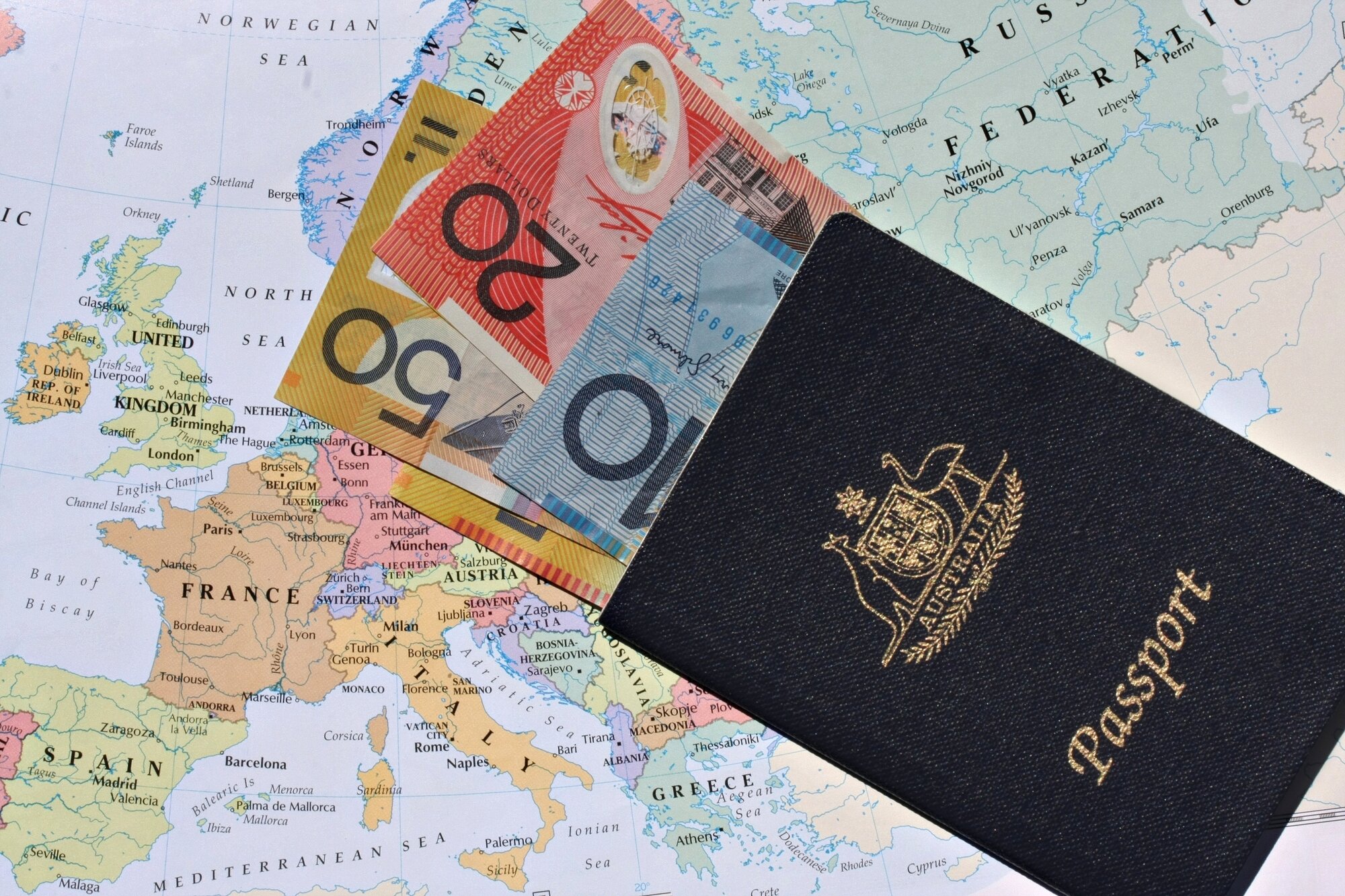
Passport requirements: Each visitor to Botswana, except holders of United Nations Convention Travel documents, must be in possession of a valid, signed passport that is valid for at least six months beyond his/her scheduled departure date.
PLEASE ENSURE YOU HAVE AT LEAST TWO BLANK PAGES IN YOUR PASSPORT FOR STAMPS/VISAS ETC. IF NOT, YOU MAY BE REFUSED ENTRY INTO BOTSWANA. FOR SECURITY PURPOSES, WE SUGGEST THAT YOU CARRY A PHOTOCOPY OF THE RELEVANT PAGES OF YOUR PASSPORT AND ANY OTHER IMPORTANT TRAVEL DOCUMENTS WITH YOU. IN ADDITION, WE ALSO RECOMMEND THAT YOU LEAVE COPIES OF YOUR DOCUMENTS WITH SOMEONE AT HOME.
VISA EXCEPTIONS: Citizens of the following countries do NOT require visas.
Nationals of all commonwealth countries, Australia, Belgium, Denmark, Finland, France, Federal Republic of Germany, Greece, Iceland, Ireland, Italy, Luxembourg, Netherlands, Norway, San Marino, South Africa, Sweden, Switzerland, Uruguay and USA. Citizens of countries not mentioned must apply for visas. Please check with your embassy for up-to-date information as requirements can change.
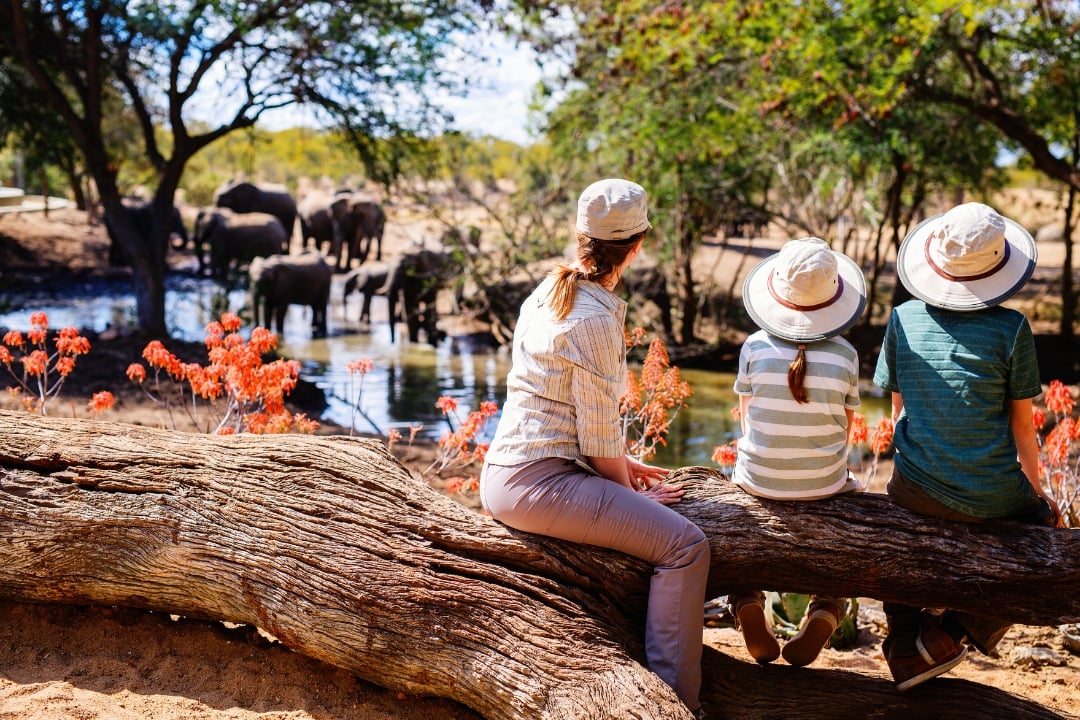
Every safari should reflect the people travelling. Some guests are celebrating a honeymoon or milestone anniversary, while others want an extraordinary wildlife experience with family.
Our itineraries accommodate:
Because every itinerary is tailored individually, your journey can move at the pace that suits you.
Planning a safari across remote wilderness regions can be challenging without expert support. Internal flights, lodge availability, wildlife seasons, and travel logistics all require careful coordination.
As experienced, attentive travel specialists, we manage every aspect of your safari planning. Our team has extensive first-hand knowledge of Botswana’s safari regions and works closely with trusted lodges and local operators.
This ensures your luxury Botswana safari is organised seamlessly from the moment you depart Australia.
We coordinate:
Instead of juggling multiple bookings, you receive one carefully designed itinerary, allowing you to focus entirely on enjoying the experience.
Both autumn and winter (April through September) are excellent times to visit Botswana, as the days are generally pleasant and the wildlife rarely wanders far from water sources. Nevertheless, these times also include periods of school holidays in Europe, North America, and South Africa, meaning that the more popular tourist destinations can become a little crowded.
In general, June, early July, and mid- to late September are the least crowded times to visit.
Summer is not a good time to hit the back roads, enjoy wildlife viewing or explore the Okavango Delta, as prolonged rains may render sandy roads uncrossable, and animals typically disperse when water is abundant. From December to March it is very difficult to get around the Chobe and Moremi national parks due to heavy rains, and many lodges actually close.
Botswana has a mainly temperate climate. Rain falls during the summer months from November – March and varies from 8″ (200mm) in the arid south, to 24″ (600mm) in the north, peaking in December and January.
Generally speaking, rain tends to fall in short thundershowers.
Weatherwise, the best time to visit Botswana is April – September when the days are generally cloudless and sunny, with mild to warm temperatures (around 25°C). However, evening temperatures can drop sharply (the minimum can be as low as -3°C).
The best game viewing is between June and October, and best birding is between December and May. Nevertheless, note that during the summer months, daytime temperatures can rise to 40°C and drop to around 25°C in the evenings.
The unit of currency is the Pula (BWP), which is divided into 100 Thebe.
Three commercial banks operate in Botswana. The Bank of Botswana, a government subsidiary, allocates generous foreign currency allowances out of Botswana.
Bank hours are 09:00–15:30 from Monday to Friday, and 09:00–11:30 on Saturdays. Major hotels typically have foreign currency facilities and accept Visa, Mastercard, American Express and Diners Club. Most shops, lodges and travel agencies will accept travellers cheques.
Many lodges however will NOT accept credit cards, so be prepared for alternative means of payment. Foreign currency can be used at the lodges, but change may be given in Pula. We recommend that our clients carry USD in cash as this is accepted everywhere.
No vaccinations are currently required for entry into Botswana when arriving directly from North America or Europe. However, we recommend that tetanus boosters for children and adults are kept up to date, with courses or boosters usually advised for diphtheria, tetanus, hepatitis A and typhoid.
A yellow fever certificate is required if the visitor is over one year old, and arriving in Botswana from an infected area or a country where yellow fever is endemic (such as Burundi, Kenya, Rwanda, Sudan, Tanzania, Uganda, or Zaire). In the case of yellow fever, the vaccine must be administered at least ten days before arrival.
Malaria precautions are essential in most of the country from November to June. Fortunately, there are several safe and effective options for both adults and children. Avoid mosquito bites by covering up with clothing such as long sleeves and long trousers, especially after sunset. We also advise the use of insect repellents on exposed skin and, where necessary, sleeping under a mosquito net. Prompt investigation of fever or flu-like symptoms anytime within six weeks of travel is essential.
As with all travel to remote places, we recommend bringing a small supply of any medicines you may need, including a course of emergency “standby” treatment for malaria.
Due to early colonial rule, English is the official business language of Botswana, and most written communication and business texts are in this language.
The main spoken language of Botswana is Tswana, utilised by most of the population. However, English is still the primary language when it comes to writing.
There are also a large number of other African languages spoken by smaller groups, including Kalanga, Kgalagadi, Shona, Mbukushu, and Ndebele. Over ninety percent of the population speak a Bantu language natively.
All charter transfers on our luxury Botswana safari tours are in light aircraft that carry between five and seven passengers. Please note that these planes are limited with regards to the weight that they can carry. It is therefore vital that all passengers adhere to the luggage restriction of fifteen (15) kilograms per person in a soft bag.
This excludes a reasonable amount of camera equipment and carry-on luggage (up to 5 kilograms – 20 kilograms in total). In addition, please let us know if you are over 188 cm (6’2”) tall or weigh over 100kg (220lbs), so that we can plan our trip appropriately.
Tickets are generally not issued for charter flights; you will however receive a voucher for your trip.
Passport requirements: Each visitor to Botswana, except holders of United Nations Convention Travel documents, must be in possession of a valid, signed passport that is valid for at least six months beyond his/her scheduled departure date.
PLEASE ENSURE YOU HAVE AT LEAST TWO BLANK PAGES IN YOUR PASSPORT FOR STAMPS/VISAS ETC. IF NOT, YOU MAY BE REFUSED ENTRY INTO BOTSWANA. FOR SECURITY PURPOSES, WE SUGGEST THAT YOU CARRY A PHOTOCOPY OF THE RELEVANT PAGES OF YOUR PASSPORT AND ANY OTHER IMPORTANT TRAVEL DOCUMENTS WITH YOU. IN ADDITION, WE ALSO RECOMMEND THAT YOU LEAVE COPIES OF YOUR DOCUMENTS WITH SOMEONE AT HOME.
VISA EXCEPTIONS: Citizens of the following countries do NOT require visas.
Nationals of all commonwealth countries, Australia, Belgium, Denmark, Finland, France, Federal Republic of Germany, Greece, Iceland, Ireland, Italy, Luxembourg, Netherlands, Norway, San Marino, South Africa, Sweden, Switzerland, Uruguay and USA. Citizens of countries not mentioned must apply for visas. Please check with your embassy for up-to-date information as requirements can change.
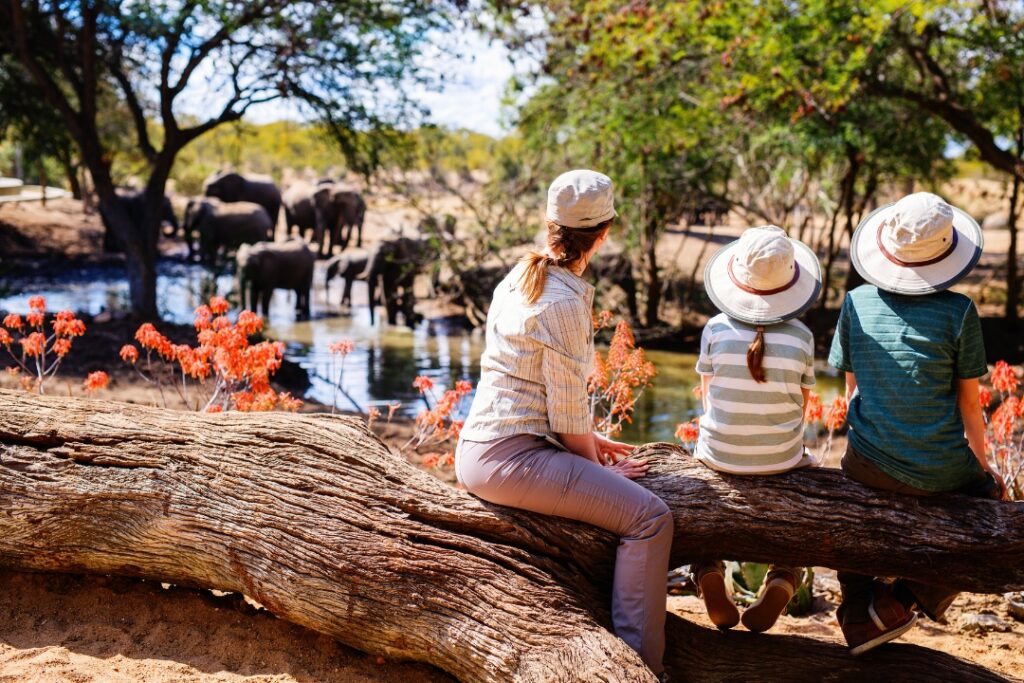
Every safari should reflect the people travelling. Some guests are celebrating a honeymoon or milestone anniversary, while others want an extraordinary wildlife experience with family.
Our itineraries accommodate:
Because every itinerary is tailored individually, your journey can move at the pace that suits you.
The Okavango Delta is widely considered one of Africa’s most remarkable safari environments. Seasonal floodwaters from Angola create a lush wetland oasis in the middle of Botswana’s otherwise dry landscape. This natural phenomenon transforms the region into a thriving wildlife sanctuary that attracts elephants, lions, leopards, hippos, and countless bird species.
Our premium Botswana safari in the Delta often includes several types of wildlife experiences:
Each lodge in the Delta occupies a private concession, allowing travellers to explore vast areas without the crowds often seen in other safari destinations. This exclusivity is a major reason why Botswana is considered one of Africa’s most refined African adventures.
Botswana offers one of Africa’s most remarkable safari environments. From the lush waterways of the Okavango Delta to the dramatic plains of Savute and Chobe, every region reveals something extraordinary.
Speak with our team to begin creating your luxury Botswana safari. As trusted African travel specialists in Australia, we will design a journey tailored to your interests, travel style, and comfort level.
Request your personalised Botswana safari itinerary today and start planning your next adventure.
The dry season from June to October offers excellent wildlife viewing as animals gather around water sources. The green season from January to March brings lush landscapes, fewer visitors, and fantastic birdlife.
A luxury Botswana safari typically ranges from AUD $1,500 to $3,500+ per person per night, depending on lodge choice, season, and internal flights. Most lodges include accommodation, meals, drinks, and daily safari activities.
Botswana is home to elephants, lions, leopards, buffalo, hippos, giraffes, wild dogs, and abundant birdlife. The Okavango Delta and Chobe National Park are among Africa’s best wildlife viewing regions.
Yes. Botswana is considered one of Africa’s safest and most politically stable countries. Safari travel is well organised, and lodges operate in carefully managed conservation areas.
Light neutral clothing, comfortable walking shoes, sunscreen, a hat, insect repellent, and a good camera are recommended. Lodges often provide laundry services, allowing travellers to pack lightly.
Most travellers spend 7 to 10 days exploring multiple regions such as the Okavango Delta, Chobe, or Savute. This allows time to experience different landscapes and wildlife habitats.
A Botswana private safari itinerary typically includes your own vehicle and guide for the length of the trip, rather than sharing game drives with other lodge guests. Most lodges also sit on private concessions, so off-track driving and night drives are usually included as standard, not offered as a paid extra.
Botswana’s low visitor caps mean fewer vehicles at every sighting and larger private concessions per lodge, so the higher nightly rate reflects genuine exclusivity rather than just finish and decor. For travellers who value space, quiet, and uncrowded wildlife encounters over a lower price point, luxury Botswana safari tours tend to deliver a noticeably different experience from busier, more affordable circuits elsewhere in Africa.